THE SOLEMNITY OF THE TRANSLATION OF THE IMAGE OF OUR LADY OF WALSINGHAM SERMON – 15 OCTOBER 2026
The Solemnity of the Translation of the Image of Our Lady of Walsingham Sermon – 15 October 2026
In his sermon, preached at the Shrine on 15 October 2026 for the Solemnity of the Translation of the Image of Our Lady of Walsingham, Fr Toby Boutle reflects on the startling mystery of the Incarnation and the Holy Image’s enduring power to unsettle complacency, deepen faith, and draw pilgrims into awe, healing, and renewed openness to God’s transforming love.
Some years ago I had to help organize the liturgy for a diocesan clergy conference. At such gatherings the worship always ends up being an insipid affair, designed to offend no-one. In preparing the text of the Eucharistic prayer, for a Mass to be said by one of the suffragan bishops, I’d including a reference to “the Blessed Virgin Mary, Mother of God”. I thought that should be OK: Christians have always revered Our Lady under that title; it is a vital, orthodox statement about the personal unity of Our Lord, fully God and fully human; the Council of Ephesus says that anyone who denies that title is to be anathema; and the teachings of the early Councils of the Church are supposedly accepted by all Anglicans – even bishops. But this bishop took exception and crossed out the words “Mother of God”. In reply to my furrowed brow, he just said, “Well, I can’t possibly say that. It would shock people.”
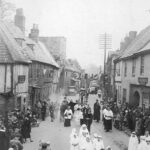
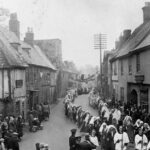
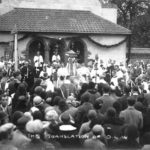
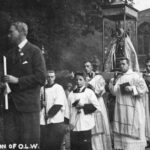
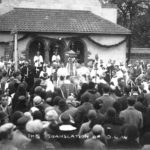
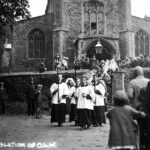
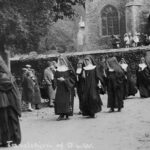
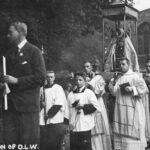
In 1930, when the then Bishop of Norwich came to visit Fr Hope Patten at the Parish Church here in Walsingham, I suppose he came ready to be shocked. It seems the Bishop tried at first just to ignore the Shrine which was then in the Lady Chapel of the Parish Church. But Fr Hope Patten wouldn’t let him off with polite avoidance and showed him the Shrine and the Image. Bishop Bertram Pollock, we’re told, then said words to the effect of: “it’s far worse than I thought: all these things which you have put in must be taken away”. It was this instruction which Fr Hope Patten took, in that joyful spirit of creative subversion that so characterizes the catholic movement within the Church of England, as the episcopal mandate for the construction of this wonderful Shrine Church and the translation of the image here, ninety-five years ago, which we celebrate today.
Whatever the Bishop’s theological concerns, I can’t help but think that underlying his disapproval was this sense that the Image of Our Lady would shock people – that it would be an afront to sedate, reassuring, establishment religion. This Shrine of Our Lady of Walsingham, as well as being a place of comfort and healing and restoration, continues to have the capacity to shock. And thanks be to God for that gift.
The incarnation is shocking. The words spoken by the Archangel to Our Lady in the Holy House at Nazareth are electrifying and, for all their familiarity, should leave us stunned. That the Holy Spirit will come upon Mary and the power of the Most High will overshadow her and that the child to be born to her will be the Son of God. That the very Word of God through whom all things were made is to take on the fullness of our humanity in the womb of this Blessed Virgin, who in purity and poverty of heart, brings as she comes to God nothing but her emptiness, her lowliness, her longing for God. All this should shock people and should still shock us.
The incarnation leaves us dizzy. Origen, writing in the Third Century recognized this. He wrote “He who is the Power and Wisdom of God himself, and in whom all things visible and invisible were created, was, we are to believe, narrowly circumscribed within the limitation of that Man who once appeared in Judaea – in the womb of a woman, then born as a baby, crying as the newly born always cry. […] The narrowness of the human understanding is at a loss and, overcome with amazement of such great admiration, does not know where to withdraw, what to hold on to, where to turn.” [De Principiis, bk. II, ch. 6.]
An encounter with the reality and the shocking particularity of the incarnation disorientates us. It challenges us, so that we have nothing, at least nothing of our own, to hold onto. It overthrows and leaves shattered our own narrow conceptions of who God is and who we are, our own self-centred attempts to create God in our own image and according to our own precepts and expectations. And it leads us even to the sacred and terrifying mystery of the Cross, to Christ Crucified, a stumbling block and folly for the world, but to those who are called, Christ the power of God and the wisdom of God.
All this makes us dizzy and shocks us, and in doing so it displaces the idols we have made for ourselves. By disorientating us it open up the possibility of us being reorientated, and, leaving aside the work of our own hands and types and shadows, makes space for a lively and lifegiving encounter with the living Lord of life.
So it is that the Image of Our Lady of Walsingham here in the Holy House is a wonderful antidote to idolatry. We are constantly tempted to diminish the wonder of the incarnation and to bypass the scandal of the Cross, to leave our creeds as empty formularies on unopened books, to be glossed over and explained away, too shocking to be allowed to be proclaimed out loud with confidence or to resonate in our hearts. The Image of Our Lady of Walsingham in this Holy House won’t let us get away with that.
The Holy House allows us to enter into the mystery of the incarnation, for us to be surrounded by it. And there to know that the Word of God indeed became flesh in the virgin’s womb and lived and grew and was nurtured in the loving home of the Holy Family. The Holy House allows to us to be enveloped in this mystery. Here we can stand beside Our Blessed Mother as she hears the electrifying words of the Archangel Gabriel.
And this Holy House witnesses too to the utter receptivity of Our Lady: behold I am the servant of the Lord, let it be to me according to your word. From her reply will unfurl in God’s grace all the saving mysteries of the new creation in Christ, as this blessed maiden takes on her vocation as the Mother of God and as the Queen of Heaven, crowned, seated in glory – Christ enthroned on her knee so that she becomes herself the Seat of Wisdom.
There is no place here for the soft idolatry of polite obfuscation and empty words – the Image and the Holy House confront us with a mystery that demands we joyfully submit in awe and wonder and delight, knowing that the Lord is indeed making all things new.
This Holy House is a place of peace and healing and comfort for the pilgrim. And how we need that. But surely we need too to be open to the holy awe and disorientation and shock that can shake us out of our complacency and allow us to be more receptive to the mystery of God, more like Our Blessed Mother in her openness to the strange message of the angel. We need that too in our lives.
We need it in our life of prayer and worship, so that like Mary we can come in true humility, knowing that everything we have is a gift of God’s grace, that we stand possessing nothing and therefore receiving everything as a grace from the Lord. We need it as we live our daily lives, as we seek to imitate Mary our Mother in living lives of purity and holiness. Shock plays a role in our moral lives: the prodigal son comes to his senses, he wake up from the mortal sleep of his life of death to come home to his father. To live the life of the Gospel we need to be unsettled, for the shocking wonder of God’s love to wake us up to how far we often wander from him. For our communities and for our nation, if the Church refuses to gloss over the radical truth of the Word made flesh, perhaps the shocking reality of God’s love might wake us all up from a culture of indifference to the poor, of hostility to the stranger and of the dehumanization of the unborn and the dying.
St Óscar Romero said, “A Church that doesn’t provoke any crises, a gospel that doesn’t unsettle, a word of God that doesn’t get under anyone’s skin, a word of God that doesn’t touch on the real sin of the society in which it is being proclaimed – what gospel is that?
The shock of the incarnation, the shockingly Good News of God’s love for us in the mysterious realities of our faith, of the new heaven and the new earth (already here in expectation) are so tangibly present in this place. And through God’s grace this has the capacity to change us. Let us give thanks to God for the shocking reality of his love in the incarnation of his Eternal Word, powerfully attested to by the Holy Image of Our Lady of Walsingham. Amen.